
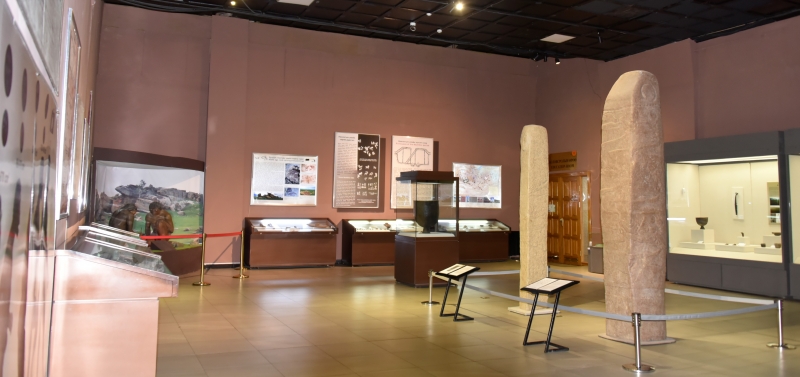
The ancient land of Mongolia
In the Ancient History Hall, you can get acquainted with many interesting artifacts that reveal the development of the life and culture of ancient people in Mongolia. Most of the exhibits in the hall were discovered as a result of archaeological exploration and excavation research, and their chronological range ranges from the Old Stone Age to the Early Iron Age. About the Ancient History Period In ancient history, the historical period from the emergence of man to the first state is called the Ancient History Period, and this historical period is divided into the Stone Age, the Bronze Age, and the Early Iron Age based on the evolution of tools and weapons used by ancient people. The Ancient History Hall is organized and decorated according to the above historical classification. Chronology of the Hall Old Stone Age 800,000 - 15,000 BCE Middle Stone Age 15,000 - 8,000 BCE Neolithic Age 8,000 - 3,000 BCE Bronze Age - 3,000 -700 BCE 700 Early Iron Age 700 - 209 BCE
Бусад танхим
12 танхим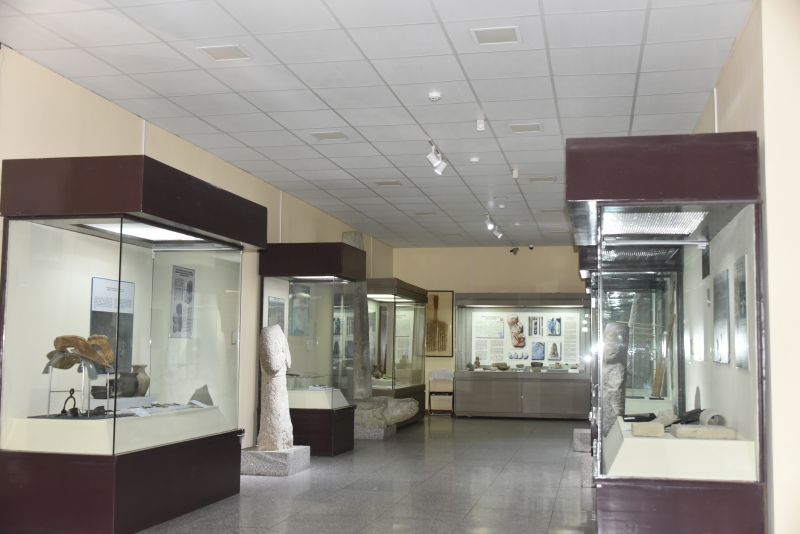
Ancient states in Mongolia
This hall tells the story of the ancient states that existed in Mongolia. Since the establishment of the first state in Mongolia in the 3rd century BC, nomadic tribes have established their own states and have existed continuously. When the tribes rose in power, they subjugated others, and when they weakened, they were subject to others, and they have been in constant competition and struggle. The Xianbi and Zhuzhan succeeded the Hunnu Empire and established their own states. From the middle of the 12th century AD to the end of the 9th century AD, Turkic tribes such as the Turks, Uyghurs, and Kyrgyz established their dominance. At the beginning of the 10th century AD, the Khitan (Kidan) of the Mongol and Tungusic tribes established their own state. The National Museum of Mongolia houses hundreds of interesting artifacts that reveal the history, culture, economy, and customs of these nomadic peoples. The hall showing the history of ancient Mongolian states is divided into the following sections. Hunnic Empire Period 3rd century BC - 1st century AD Turkic Khanate Period 6th - 8th century AD Uyghur Khanate Period 8th - 9th century AD Chinese Empire Period 10th - early 12th century
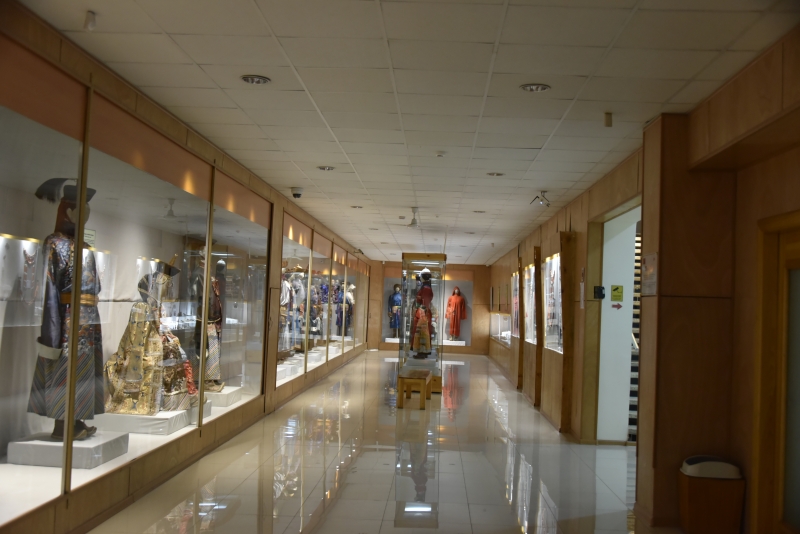
Traditional clothing and ornaments
The Mongolian people were formed in the 13th century and now consist of 2 nationalities and more than 20 ethnic groups. This hall displays Mongolian clothing and ornaments from the late 19th and early 20th centuries. These include state ceremonial clothing, men's and women's clothing of ethnic groups, seasonal clothing and ornaments. At the beginning of the hall, there are archaeological finds related to the history of Mongolian clothing, illustrations and illustrations from books and scriptures, and a photo board reproduced from historical photographs from the turn of the last two centuries.
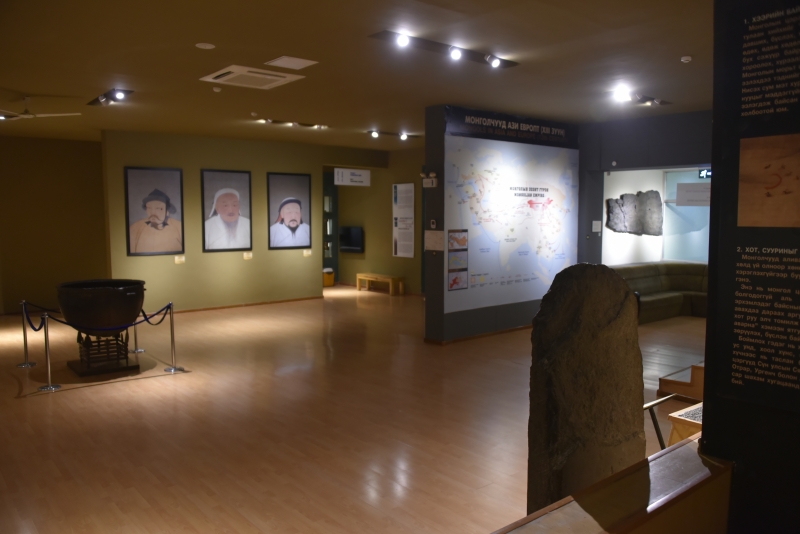
Mongol Empire
The Mongolian Empire Hall consists of historical, archaeological, and ethnographic exhibits related to the history of the Great Empire that was formed by the Mongols and dominated world history for 200 years. The Mongols conquered many countries in Eurasia in the 13th-14th centuries and created a great empire that was unprecedented in human history. It is the second largest empire in the world in terms of the territory it conquered. The Mongolian Empire at that time consisted of five main components that united more than 50 states and ethnic groups. These are known in history as the Golden Horde, the Chagatai Khanate, the Il Khanate, and the Yuan Khanate. The Mongolian Empire Hall tells the story of the Mongol Khanates before Genghis Khan, the Great Mongol Empire, and the Empire of Genghis Khan's successors.
Hall 5
Floor 2
Mongolian traditional national costume
Floor 2
Mongolian traditional culture
Floor 3
Traditional Mongolian farming
Floor 3
Bogd Khanate Mongolia
Floor 3
13th century
Floor 3
Democracy
Floor 3
The socialist era of the People's Republic of China
Floor 3