Main temple
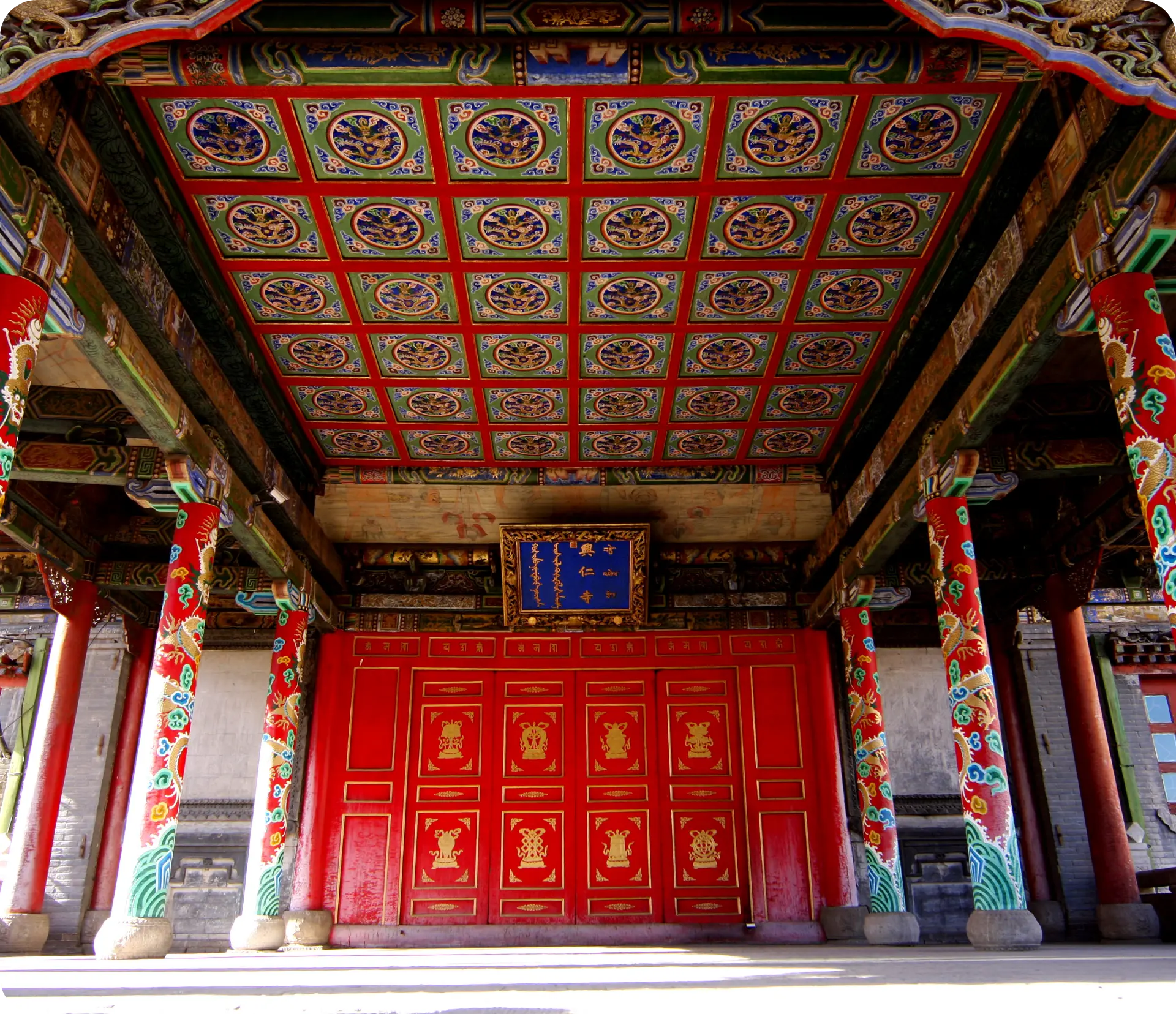
This temple was the main place of the religious practice of the State Choijin Luvsankhaidav. This temple is an exhibition of many unique Mongolian religious and cultural heritage, including intricately carved paintings of gods, zeegt naamal, tsam bag garments, the land of gods, pictures of hot and cold hell, and religious musical instruments. In the interior of the temple, a 13th-century gold-plated image of the Buddha with two disciples is enshrined. On the high throne to the right of the Buddha, a mummified image of the Choijin Lama Luvsankhaidav Khutaght is respectfully enshrined, and on the left, a mummified image of Khamba Nomun Khan Baldanchoymbol is respectfully enshrined. There is an archive document that in 1916, the VIII Bogd Javzandamba Khutaght visited the Choijin Lama's temple. Today, many tsam bags made by Khuree, Manzushir, and Choir are displayed in glass enclosures along the west and east walls of the temple. Among them, the complete robes of the Jamsran and Gombo gods, the robes of the gods
Бусад танхим
8 танхим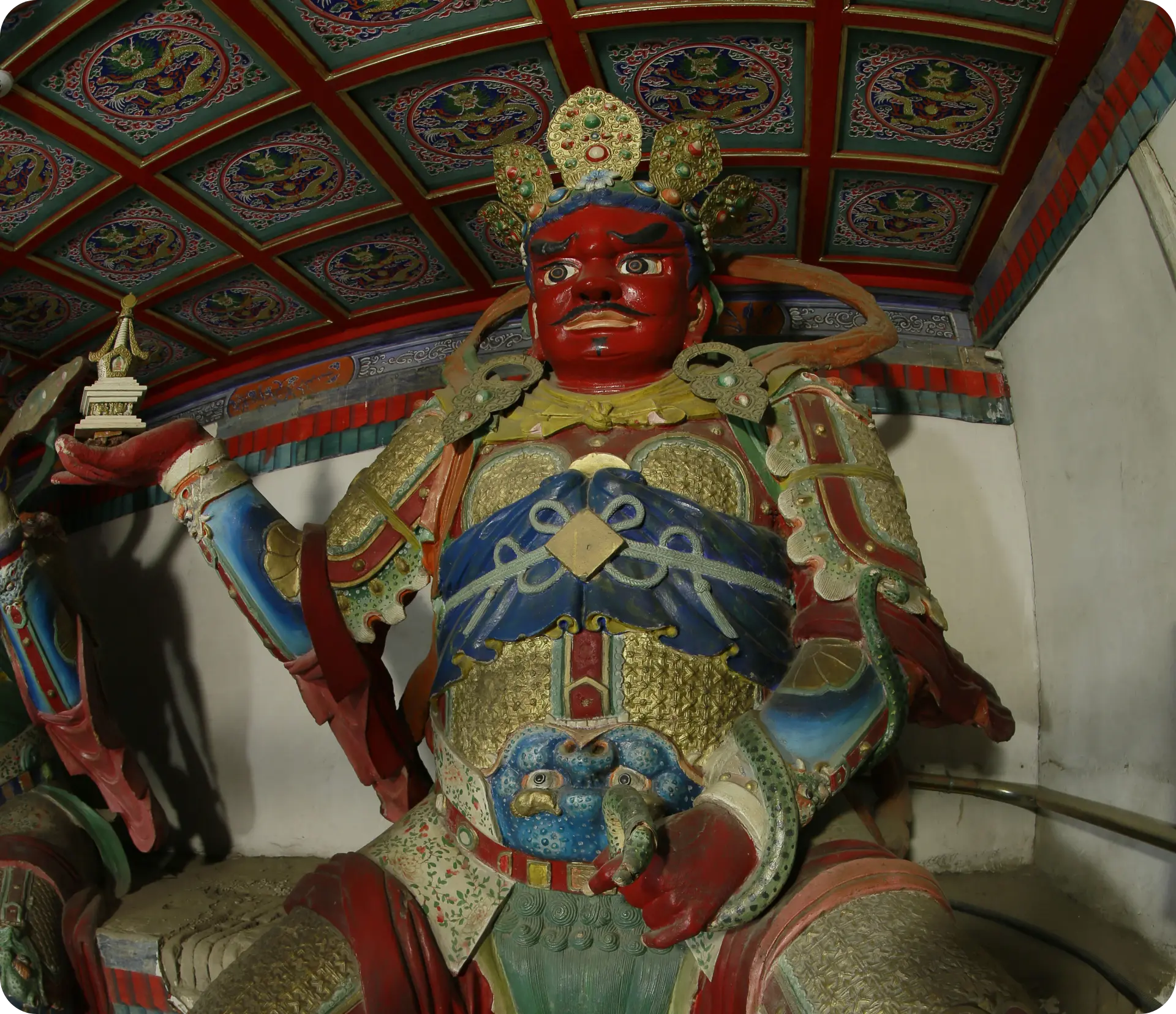
Maharanz Mosque
The four majestic “protector kings” standing in pairs on both sides of the Maharanz temple gate were created by the Great Lama Uran Shoiv, Ayuush, and Vaanchig using paper cutting and sculpture. It is a tradition to place four majestic and fierce Maharanz at the entrance of any temple. The legend about the origin of Maharanz is as follows: Before this era, during the reign of Buddha Odsuren, two Lus named Ugdan and Ugchin, and two Khangards named Danyan and Dachun, were at enmity with each other and always caused each other suffering and harm, so the two Lus named Ugdan and Ugchin were able to live in peace by praying to the three treasures. When the astonished Gardis asked the Lus, they told them the reason. Realizing all this, the two Gardis also prayed to the three treasures and lived in harmony, and together they made a blessing to help the people and animals of Zambuu. Later in this period, there is a legend that Ugdan and Ugchin transformed into Yulkhorsuren and Pagjiibuu, while Danyan and Dachun transformed into Jamisan and Namsrai, vowing great blessings to protect the religion from evil. According to Buddhist teachings, these are the four directions of Mount Sumber and are the protector kings on all four sides.
Zankhan Mosque
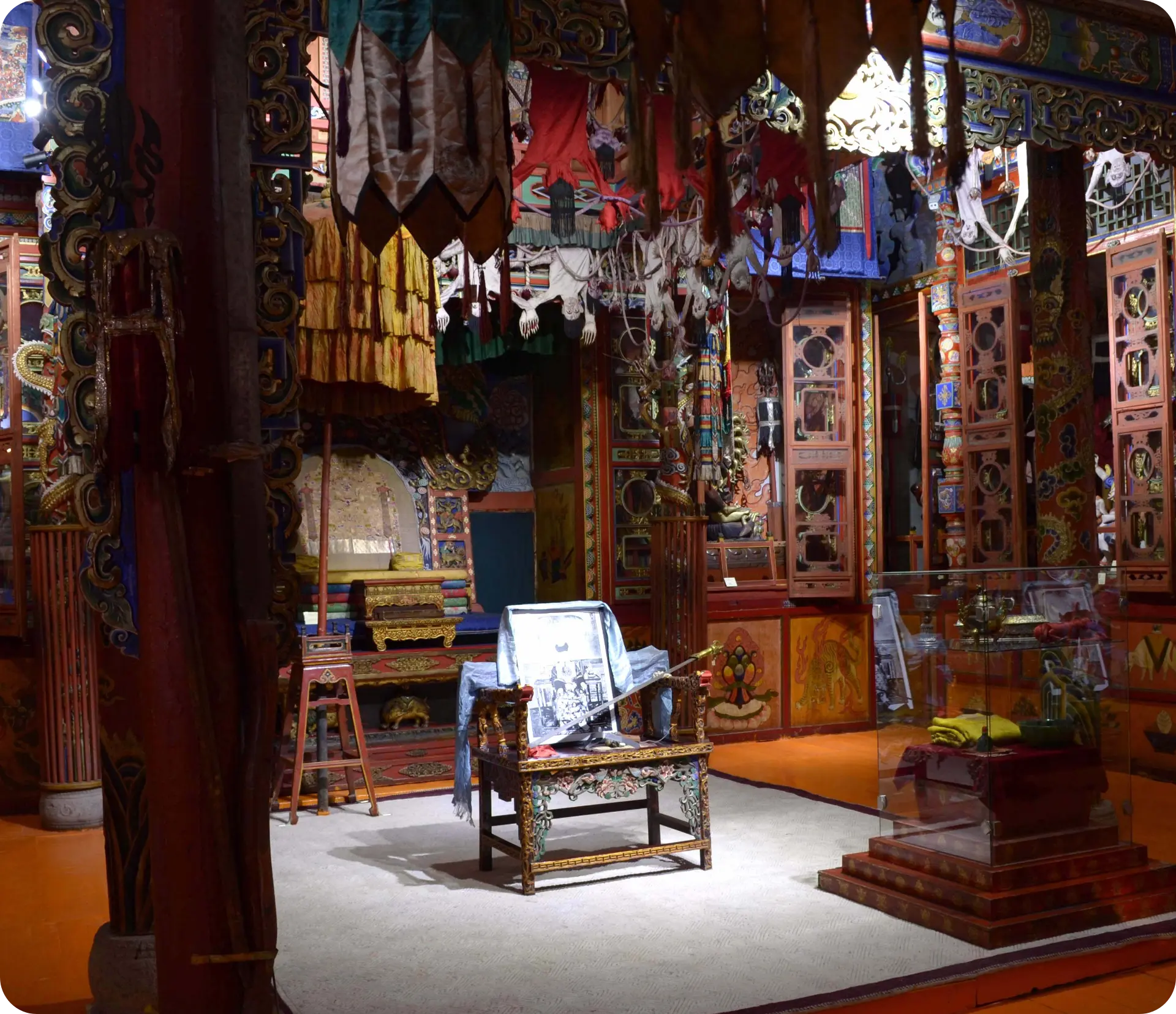
The name of the Zankhan Temple, translated from Tibetan, means “Land of the Beasts.” This temple was used by the state amulet god, Luvsankhaidav Khutug, to place his religious amulet. Therefore, the VIII Bogd Javzundamba Khutug, as well as high dignitaries and nobles, had the right to enter. The “Zankhan Temple” of Choijin Lama Luvsankhaidav is entirely designed to reflect the characteristics of the religious “Chojin Descent” ritual and the power of fierce amulets. In the center of the temple, like all other temples in Mongolia, there is a throne decorated with eight lions and nine dragons, which symbolize the power of the YIII Bogd Javzundamba Khutug, the head of religion and state. In the western part of the temple, there are gold and silver statues of Bogd Tsongkhawa, the founder of the Yellow Religion, and Lovon Badamjunai, the founder of the Red Religion, who took the oath of many powerful beings and made them amulets to protect the book. In the eastern part, there are statues of the Buddha Jigjid, the Buddhist deity, and the old amulets worn by the Gudenbe Luvsankhaidav Khutagt, which create a very majestic appearance and color.
The Hundred Temples
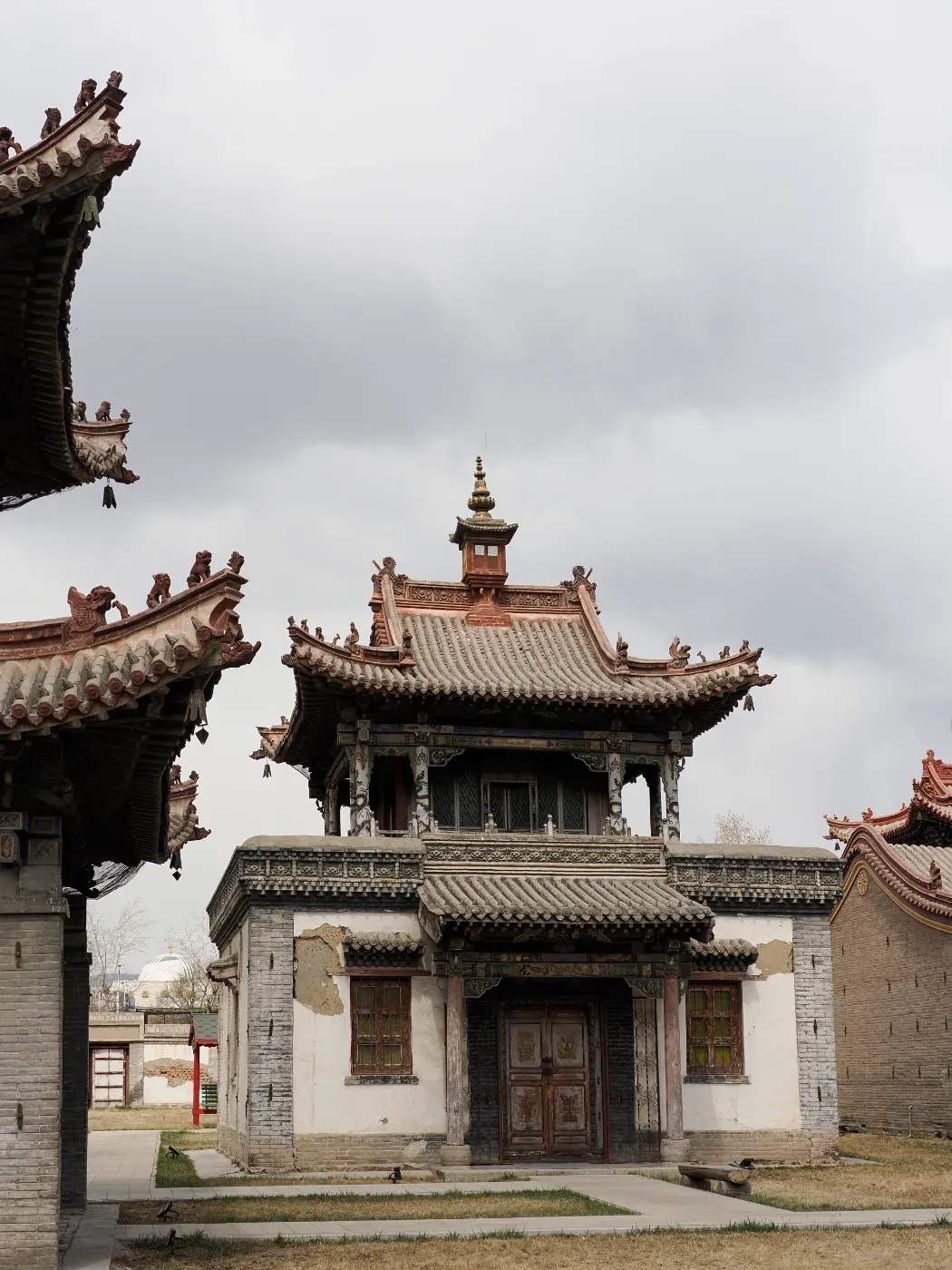
The word "Zuu" comes from the Tibetan word "Zhouwu" meaning "exalted". The Tibetan monk Tsongkhapa (1357-1419) established the tradition of offering a crown of jewels to Shakyamuni Buddha at the famous Johan (Jouwu Buddha) Temple in Lhasa, Tibet, and holding the "Great Blessing" religious wedding every year. Based on this, "Zuu Temple" was built for Buddha near major temples in Buddhist countries. All the exhibits of the Zuu Temple in the Choijin Lama Temple Museum are made of paper mache. In the temple's courtyard, the images of the three gods of the past, the god Gashib (sa: Kasyapa, tu: Odsuren), the god Shakyamuni of the present, and the god Maitreya of the future, were made of paper mache by two disciples. Also, the walls of the temple are uniquely decorated with images of arhats who, having abandoned the worldly life, practice the Dharma of the Supreme Being in the wilderness. Floor 1setsetgse
Yadam Temple
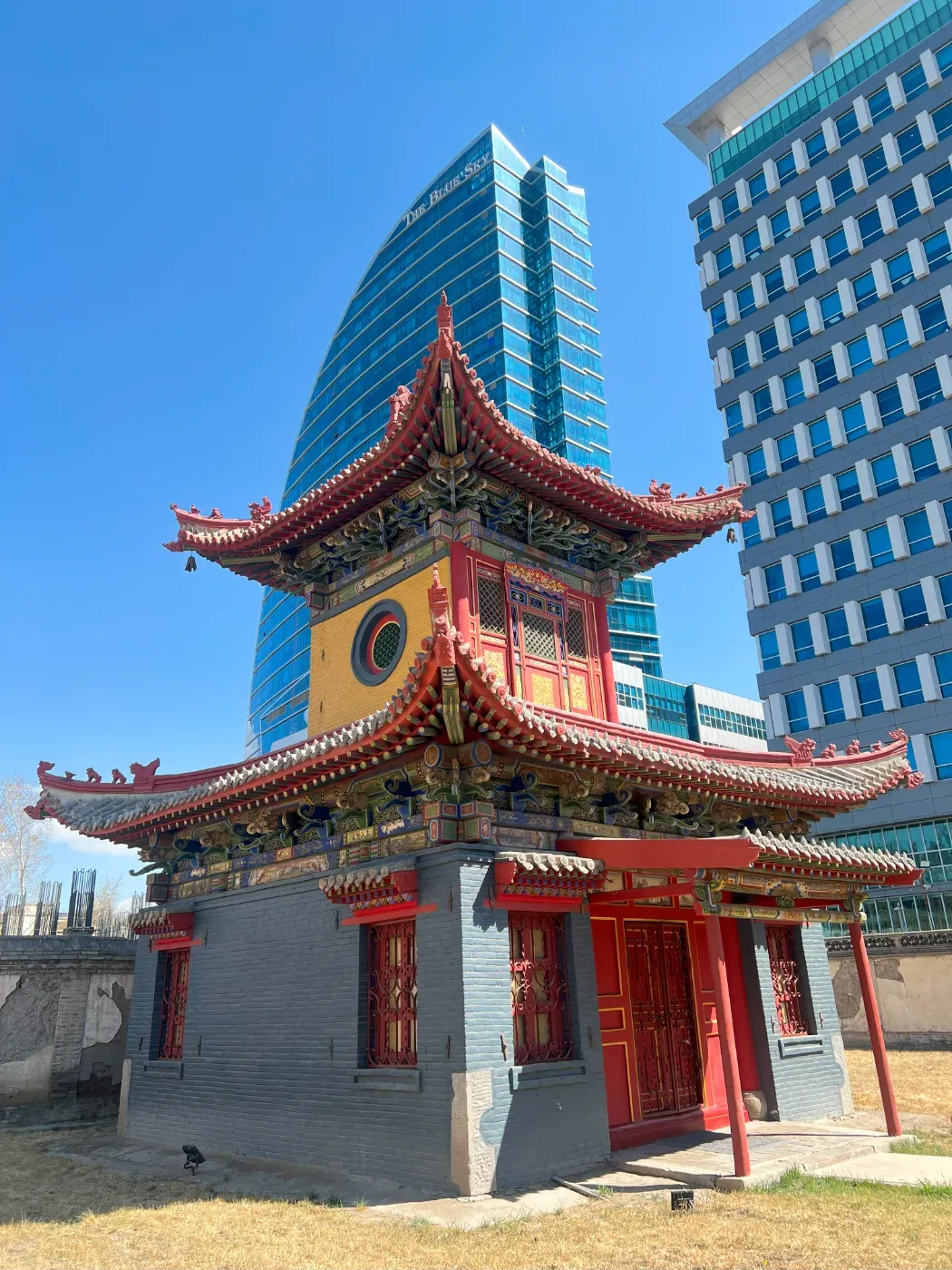
The Yadam Temple is separated from the other three temples by a wall behind the Main Temple. This temple is the home of the Yadam gods, the sacred idols of the secret tantric creations of the Chojin Lama Luvsankhaidaw, and the main temple of the meditation ninban. Yadam Buddha means the god of meditation bound by the vow of the human soul. The Yadam gods of Chojin Lama Luvsankhaidaw are often fierce and have the appearance of parents and gods. In the courtyard of the Yadam Temple, a golden statue of Dvchin Nagbujodba (sa: Mahasiddha Hanaba, Gankhaba, Krishnacharya - meaning "Black Teacher", "Black-skinned Magician"), one of the ancient incarnations of the Luvsankhaidaw Khutagh, is respectfully enshrined. On the east and west sides of the church, intricately designed sculptures such as Demchiggarav, Duynkhor, Demchog, Mahamaya, Yansan-Yadam, Jamsran, and Lamid Dara Ekh are installed. Floor 1
Undur Gegeni Mosque
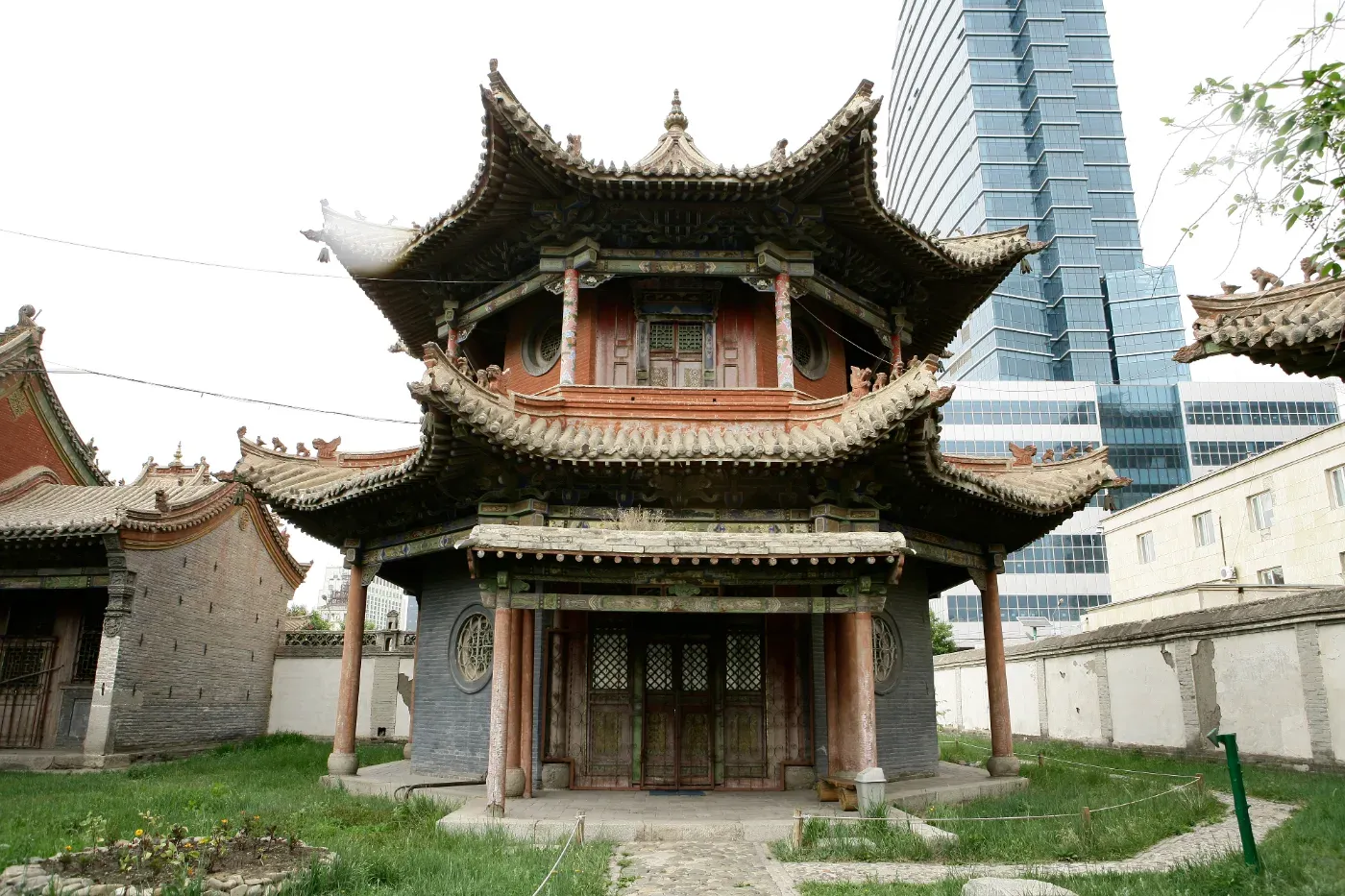
The Hotol Tsanghaeng Tusanglamg Temple has eight rounded walls like a Mongolian ger, its roof is in the shape of a sky, and its walls have a unique and luxurious design reminiscent of the steppe, the palm-shaped sky, and the land of the mermaids. It is located to the east of the Main Temple. The temple was named “Hotol Tsanghaeng Tusanglamg Temple” by the Manchu emperor, and has been revered by many as “Ondur Temple”, “Ondur Gegeniy Temple”, and “Urgulin Temple”. The temple was named in honor of Ondur Gegeniy because his unique and precious works are preserved in the temple. In the temple, the unique and unique precious bronze casts and gold-plated gods brought to life by the hands of Ondur Gegen Zanabazar, as well as the magnificent and artistic classic works of his school, captivate the eyes of the audience and delight the soul. Floor 1
The gate of honor
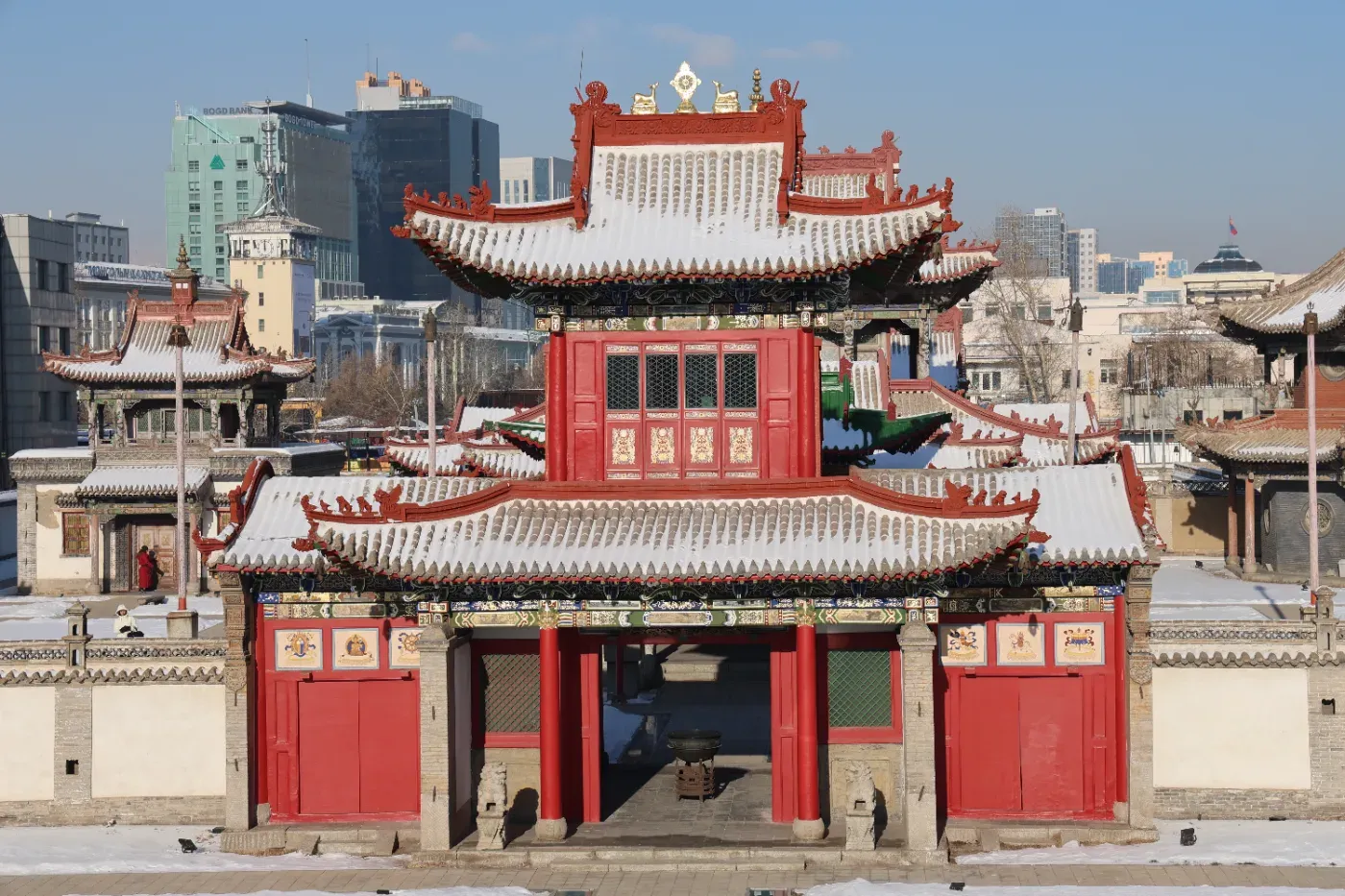
On the north side of the Mahranz Mosque, there is the “Honorary Gate of the Witches’ Slaughtering Tribe”. It is decorated with blue bricks for ceremonial purposes, and at the top is a golden-gilded Dharma wheel and male and female deer figures shining in the light of the sun, which are wonderful symbols and strange paintings. It symbolizes “closing the gates of evil spirits and evil spirits, opening endless happiness.” During important state events and ceremonies, it was customary for the Bogd Khan and Mongolian nobles to enter through the main gate, monks to the left, and ordinary pilgrims to the right. On the main part of the gate, a plaque decorated with eight altars, and the name written in Soyombo, Tibetan, and Mongolian script on a blue background, means “The great palace built by the unyielding efforts of the great Angal, the Slaughtering Tribe of the Black Slaughtering Tribe.” Floor 1
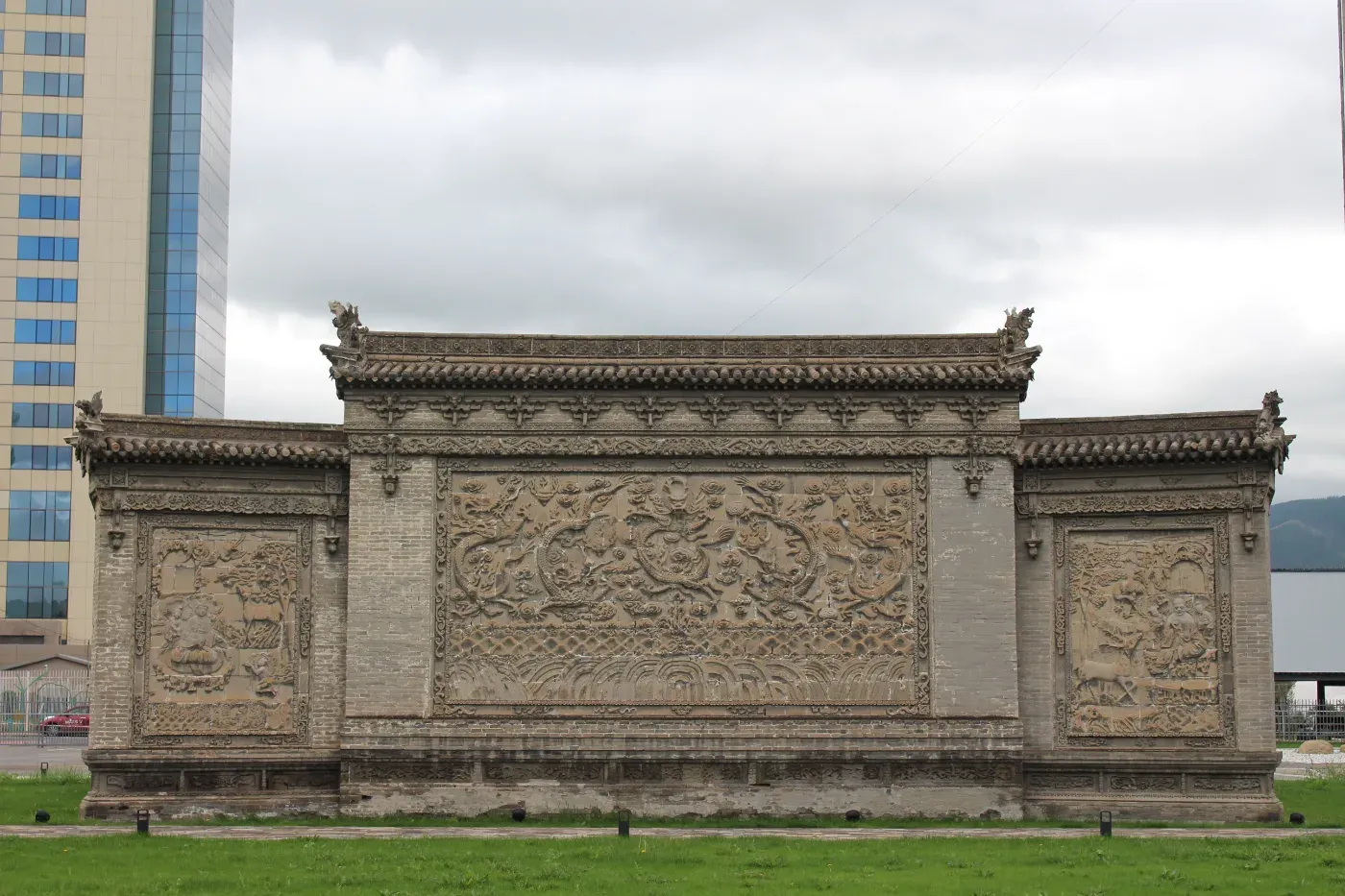
Yampa Gate
The blue-gray “Khalkh Gate” at the very front of the Choijin Lama Temple Museum is a striking symbol and decoration. This gate is seven meters high and sixteen meters long. There are only three such Khalkh gates in Mongolia today. However, the Khalkh gate of our museum has a unique feature that distinguishes it from others in terms of decorative art and color. In the 18th-early 20th centuries, this gate was erected in front of palaces and temples that were especially important for the entire Warring States period and received the patronage of the emperor as a symbol of rank and authority. The main panel in front of the Khalkh gate of the Choijin Lama Temple Museum depicts a gari bird with two lions, and the “Eight Immortal Amulets” common in Eastern culture are depicted on the right and left panels. On the north side, the five four-clawed dragons of the heavenly god of the palm tree and the six long-lived dragons, which symbolize the long life of all living beings without suffering and joy, are intricately carved. The Khalkh Gate is decorated with eight auspicious offerings and a beautiful pattern of jasmine flowers. The Khalkh Gate symbolizes protection from all dangers, obstacles, and evil spirits. Floor 1